
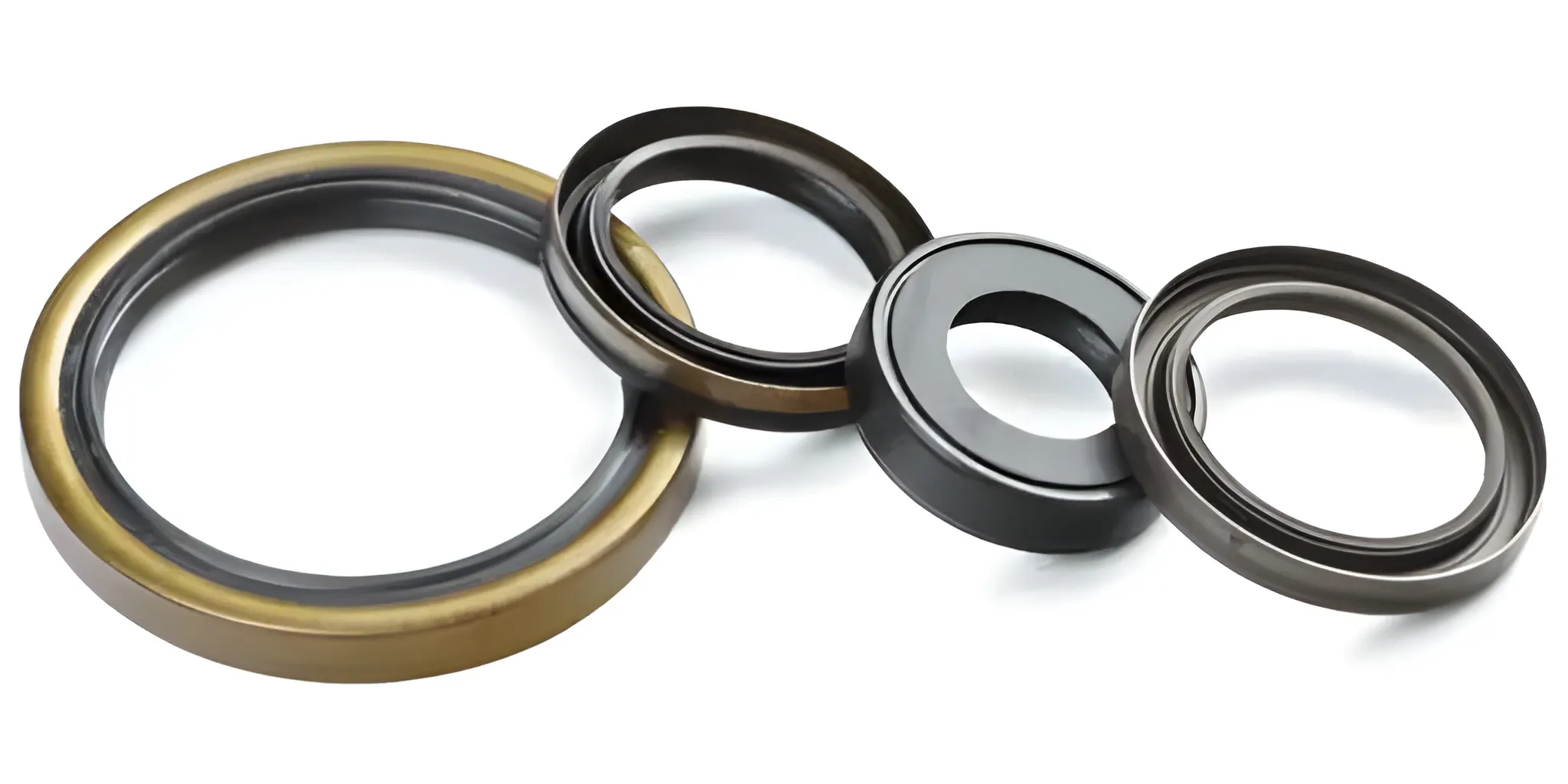
Bearings World is an Oil Seal Supplier UAE, providing sealing solutions for automotive systems, industrial equipment, and heavy-duty machinery. As an oil seal supplier Dubai, oil seal supplier Abu Dhabi, and oil seal supplier Sharjah, we support businesses across Ajman, Ras Al Khaimah, Fujairah, and Umm Al Quwain with sealing requirements for various operating environments. Our solutions address the needs of equipment where lubricant retention, shaft protection, and contamination control are essential for reliable operation.
An oil seal, also called a rotary shaft seal, lip seal, or grease seal, fits between a rotating shaft and a stationary housing to retain lubricants and help prevent dust, dirt, and moisture from entering machinery. Available configurations include single-lip and double-lip designs, metal-cased and rubber-covered outer surfaces, and spring-loaded sealing lips for different operating conditions. Selecting suitable industrial oil seals UAE depends on shaft diameter, outside diameter, seal width, rotational speed, temperature, and compatibility with the operating fluid. These factors also help determine whether automotive oil seals UAE, heavy-duty oil seals UAE, or other sealing solutions are appropriate for applications in construction, marine, manufacturing, and industrial equipment.
Purpose of Oil Seals
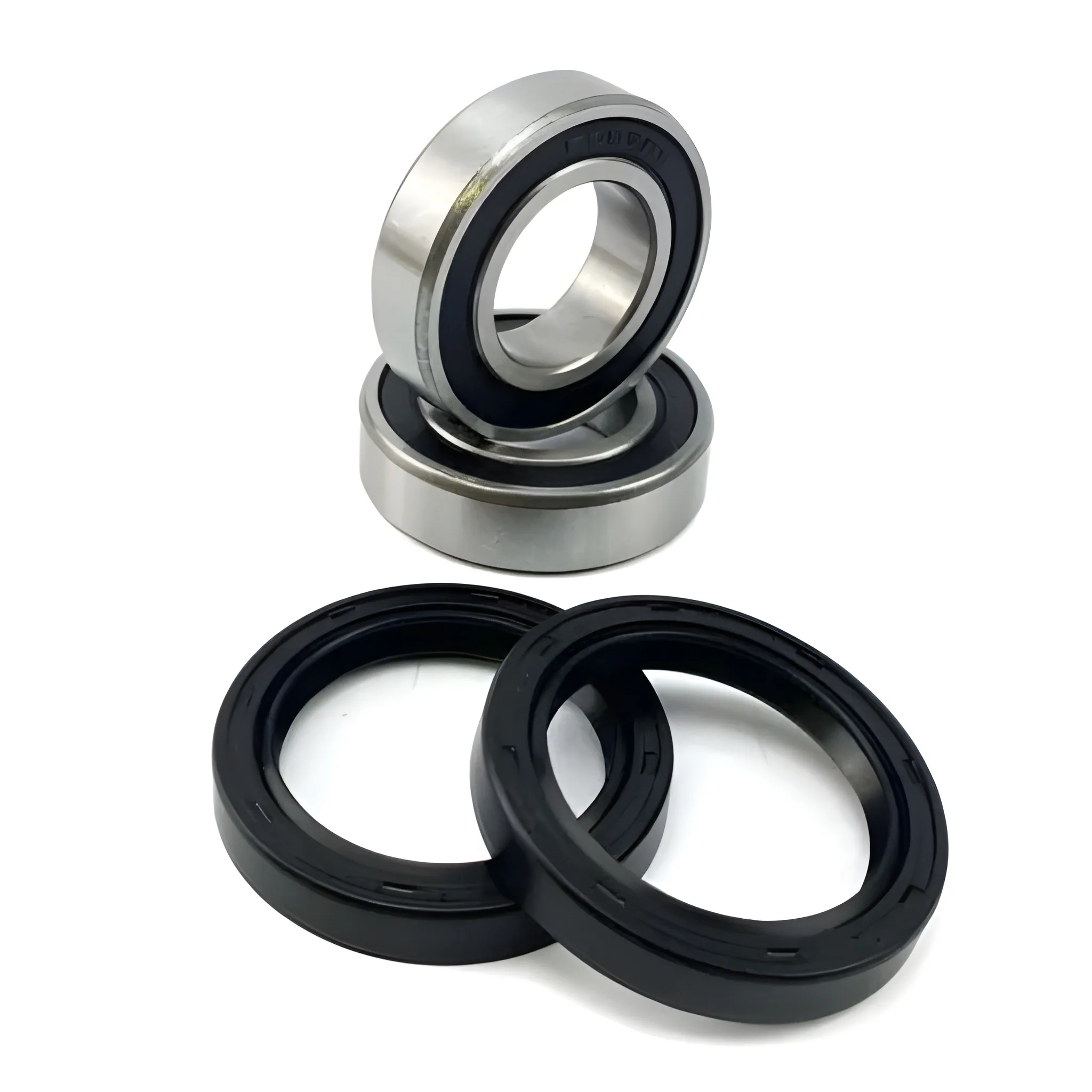
When sourcing products from an oil seal supplier UAE, understanding their operating functions helps businesses identify suitable sealing solutions for machinery. Bearings World supports different equipment requirements by focusing on three key functions of oil seals:
Lubricant Retention: Oil seals create a sealing interface between a rotating shaft and its housing, helping retain oil and grease for effective lubrication. Correct sizing and lip contact can help reduce lubricant leakage, friction, and premature component wear.
Contaminant Protection: As an oil seal supplier Dubai, Bearings World addresses sealing needs in environments exposed to dust, dirt, moisture, and other particles. Single-lip designs suit many standard applications, while double-lip configurations provide an additional barrier against external contaminants where operating conditions require it.
Fluid Separation: Suitable sealing arrangements help control the movement of lubricants and other fluids around rotating components in industrial and automotive equipment. Factors such as shaft speed, temperature, fluid compatibility, seal material, and housing dimensions influence seal selection and service performance.
How Oil Seals Work
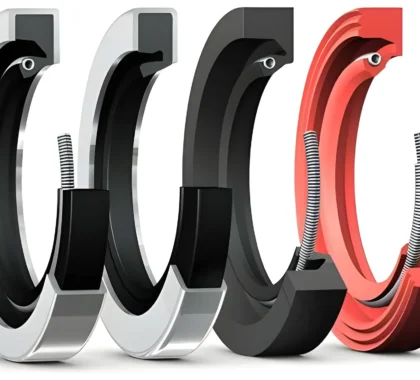
An oil seal forms a controlled sealing interface between a rotating shaft and its housing. The main components work together to retain lubricants while limiting the entry of dust, moisture, and other contaminants.
Outer Case – Holds the sealing element in the housing bore and provides structural support.
Flexible Sealing Lip – Maintains contact with the rotating shaft to help retain oil or grease.
Garter Spring – Applies radial pressure around the lip, helping maintain contact as the shaft rotates.
Outer Diameter Design – Depending on the application, the seal may use a metal case for rigid housing retention or a rubber-covered exterior to accommodate minor surface irregularities in the bore.
The correct design depends on factors such as shaft diameter, housing bore, seal width, speed, pressure, temperature, and the fluid being contained.
Types of Oil Seals
Bearings World supplies different sealing configurations for industrial and automotive equipment.
Single-Lip Seals (SC) – Primarily designed for fluid retention where external contamination is relatively limited.
Double-Lip Seals (TC) – Combine a main sealing lip with an additional dust lip, making them suitable for environments exposed to dirt and other contaminants.
Metal-Cased Seals – Provide a rigid outer structure for applications requiring firm housing retention.
Rubber-Covered Seals – The elastomeric exterior can help accommodate minor housing-bore imperfections and provide static sealing around the outer diameter.
Spring-Loaded Seals – Use a garter spring to maintain radial contact between the sealing lip and shaft during rotation.
Cassette Seals – Multi-component sealing arrangements designed for demanding applications where additional protection from mud, dirt, and contaminants is required.
Labyrinth Seals – Use a series of passages or grooves to restrict contaminant entry and lubricant escape, particularly in selected rotating equipment applications.
PTFE Seals – Offer low friction and resistance to many chemicals and elevated temperatures, making them useful for specialized operating conditions.
Hydraulic and Pneumatic Seals
Sealing requirements differ when equipment uses reciprocating rather than rotary movement. Hydraulic and pneumatic systems commonly use several complementary components:
Hydraulic Rod Seals help prevent pressurized fluid from escaping around a moving cylinder rod.
Piston Seals maintain the pressure difference across the piston during cylinder movement.
Wiper Seals remove dirt and foreign particles from the rod before it enters the cylinder.
Wear Rings or Guide Rings help guide moving components and reduce the possibility of metal-to-metal contact.
Pneumatic Rod and Piston Seals are designed for reciprocating air-powered actuators where low friction is an important consideration.
These components are commonly used in excavators, lifting equipment, hydraulic cylinders, industrial actuators, and other mobile or stationary machinery.
Mechanical Sealing Solutions
Mechanical seals are used in rotating equipment where fluid containment is required around shafts. Their construction can vary according to equipment and operating conditions. Common arrangements include single-spring and multi-spring designs, cartridge configurations, bellows-based constructions, and single or double sealing arrangements.
They are frequently applied in pumps, agitators, compressors, process equipment, and other rotating machinery.
Common Materials of Oil Seals
Material selection should correspond to the fluid, temperature, speed, pressure, and surrounding environment.
Nitrile Rubber (NBR) – Commonly used with mineral oils, hydraulic fluids, fuels, and lubricating greases under standard operating conditions.
Fluoroelastomer (FKM/FPM) – Suitable for applications involving elevated temperatures, fuels, oils, and selected chemicals.
Ethylene Propylene Rubber (EPDM) – Useful with hot water, steam, and glycol-based fluids, but generally unsuitable for mineral-oil and petroleum-based applications.
Silicone (VMQ) – Provides flexibility across a broad temperature range and is used in selected automotive, food, and specialized applications.
Hydrogenated Nitrile (HNBR) – Offers greater resistance to heat, chemicals, and mechanical stress than standard NBR in demanding applications.
PTFE – Provides low friction and broad chemical resistance and can be selected for specialized high-temperature or chemically aggressive environments.
ACM / Polyacrylate – Often selected for automotive applications requiring resistance to hot oils and elevated temperatures.
Other engineering materials can also be used in sealing systems, including polyamide, POM, UHMWPE, stainless steel, tungsten carbide, bronze, and carbon-based materials, depending on the component and operating conditions.
Oil Seal Sizing and Selection
Choosing the correct replacement involves more than matching the outside diameter. A standard rotary oil seal is commonly identified using three principal dimensions:
Inner Diameter (ID) × Outer Diameter (OD) × Width
For example, a specification such as 25 × 47 × 7 mm indicates a 25 mm shaft diameter, 47 mm housing bore, and 7 mm seal width.
Before ordering, buyers should also confirm:
Seal profile and lip configuration
Shaft speed or RPM
Operating pressure
Minimum and maximum temperature
Fluid or media being sealed
Seal material
Shaft and housing condition
Existing seal markings or part numbers
Providing these details can reduce incorrect fitment and unnecessary replacement work.
Common Selection and Installation Mistakes
An incorrectly selected seal can result in leakage, accelerated wear, or reduced equipment performance. Common issues include:
Providing only the housing diameter without the shaft diameter and width
Selecting a single-lip design for an application requiring additional contamination protection
Choosing a material that is incompatible with the operating fluid
Installing a new seal against a badly worn or grooved shaft
Fitting a rigid metal-cased seal into a damaged or corroded housing bore
Ignoring operating temperature, pressure, or shaft speed
Installing a seal without suitable lubrication where the application requires it
During installation, the sealing lip and shaft should be handled carefully to prevent cuts, deformation, or damage. Compatible lubrication can also help the lip pass over the shaft during initial operation and reduce the risk of excessive friction.
Supporting Multiple Industries
Oil seals and related sealing components are used across a broad range of equipment and operating environments.
Automotive – Engines, transmissions, wheel hubs, steering systems, and commercial vehicles
Construction & Heavy Machinery – Excavators, loaders, cranes, bulldozers, and hydraulic equipment
Oil & Gas – Pumps, hydraulic systems, process equipment, and specialized high-pressure applications
Marine & Offshore – Rotating equipment and systems exposed to demanding environmental conditions
Agricultural Machinery – Tractors, harvesters, hydraulic equipment, and machinery operating in dusty environments
Manufacturing – Production machinery, conveyors, motors, gearboxes, and rotating equipment
Food & Pharmaceutical Equipment – Selected sealing components designed around hygiene, temperature, and process-fluid requirements
Material Handling – Conveyor systems, lifting equipment, and power-transmission machinery
Service Across All Emirates
As an oil seal supplier UAE, Bearings World serves customers across:
Oil seal supplier Dubai
Oil seal supplier Abu Dhabi
Oil seal supplier Sharjah
Oil seal supplier Ajman
Oil seal supplier Ras Al Khaimah
Oil seal supplier Fujairah
Oil seal supplier Umm Al Quwain
The range can support requirements involving industrial oil seals UAE, automotive oil seals UAE, heavy-duty oil seals UAE, hydraulic oil seals UAE, rubber oil seals UAE, and shaft oil seals UAE.
Product Supply for Different Requirements
Bearings World supports businesses looking for different sourcing options, including:
OEM oil seals supplier UAE – For applications requiring specified manufacturer dimensions or part references.
Oil seal distributor UAE – For businesses sourcing sealing components through distribution channels.
Oil seal stockist UAE – For requirements where readily available standard sizes are needed.
Oil seal wholesale UAE – For commercial buyers purchasing larger quantities.
Custom oil seals UAE – For equipment requiring non-standard dimensions, materials, or sealing configurations.
High-performance oil seals UAE – For applications involving demanding temperature, speed, pressure, or media conditions.
Why Proper Seal Selection Matters
The correct sealing solution helps retain lubricants, control fluid leakage, and limit contamination around moving components. Selection should therefore consider the complete operating environment rather than relying on size alone.
For technical requirements, providing accurate dimensions, application details, operating conditions, and existing seal information gives a supplier a clearer basis for identifying a suitable sealing configuration.
What Are the Different Types of Oil Seals and Their Typical Applications?
| Oil Seal Type | Common Applications | Key Benefit |
|---|---|---|
| Single-Lip Seal | Gearboxes, pumps | Prevents oil leakage |
| Double-Lip Seal | Dusty industrial environments | Seals oil and blocks contaminants |
| Metal-Cased Seal | Heavy machinery | Strong housing retention |
| Rubber-Cased Seal | General industrial equipment | Better sealing on rough housings |
| PTFE Seal | Chemical plants, high-speed shafts | Low friction and chemical resistance |
| Cassette Seal | Wheel hubs, agricultural equipment | Multi-lip protection against mud and water |
| Labyrinth Seal | High-speed motors and turbines | Non-contact sealing with minimal wear |
How can I find a reliable Oil Seal Supplier UAE for industrial and automotive needs?
To choose the right Oil Seal Supplier UAE, look for companies that provide genuine industrial oil seals, automotive oil seals, hydraulic oil seals, and custom sealing solutions. A trusted supplier in Dubai, Sharjah, Abu Dhabi, and other Emirates should also offer OEM oil seals, wholesale options, and quick delivery across the UAE. Partnering with a professional distributor ensures durability, high performance, and long-term reliability for your machinery and vehicles.
What Size Oil Seal Do I Need?
Measure the shaft diameter, housing bore, and seal width accurately. Matching these dimensions with your equipment specifications ensures proper sealing, leak prevention, and longer service life.
How to Identify Your Oil Seal Number Quickly?
Check the seal's outer surface for the printed part number. If it's unreadable, measure the shaft diameter, outer diameter, and width, then match these dimensions with the manufacturer's catalog.
How Long Do Oil Seals Last? When Should I Replace Mine?
Oil seal lifespan depends on operating conditions, maintenance, and material quality. Replace the seal if you notice oil leaks, unusual noise, contamination, or visible wear to prevent equipment damage.
Where Are Oil Seals Used in Machinery?
Oil seals are commonly used in engines, gearboxes, pumps, motors, hydraulic systems, compressors, and industrial machinery to retain lubricants, prevent leaks, and block dust, dirt, and moisture.
What Causes Oil Seal Wear and How to Prevent It?
Oil seal wear is often caused by friction, contamination, heat, improper installation, or shaft misalignment. Regular maintenance, correct lubrication, and using the right seal material help extend service life.
Can You Repair an Oil Seal or Do You Need to Replace It?
Oil seals are generally not repairable once damaged or worn. Replacing the seal with the correct size and material ensures reliable performance, prevents leaks, and protects machinery from further damage.
Read More Posts
https://bearingsworld.net/bearing-belt-supplier-uae/
Leave a Reply Cancel reply
Comments

Bearings World Auto spare parts Trading LLC, Sharjah br. hold pride in introducing ourselves as the part of Bearings world group which is one of the leading source for all types of bearings in U.A.E market.
Copyright © 2025 Bearings World. All Rights Reserved. Powered by Adsonz
We were looking for a reliable oil seal supplier UAE for our equipment requirements. Bearings World helped us understand the available oil seal options and identify a suitable solution for our needs. The communication was clear, and the support made the selection process easier. We appreciate their assistance with our oil seal requirements.
Great service and quality products! Bearings World offers reliable oil seals and bearing solutions with professional customer support. Highly recommended for industrial requirements.
We needed different oil seal sizes for our maintenance requirements, and Bearings World made the sourcing process easy. Their team understood our specifications and helped us identify suitable options without unnecessary delays. We appreciated the clear communication and smooth ordering experience.
We sourced oil seals from Bearings World for our machinery requirements, and the ordering process was straightforward. The team helped us identify the suitable seal specifications and delivered the required products on time. The seals have performed well in our equipment, and their technical assistance was useful throughout the purchase.
Bearings World has been our trusted Oil Seal Supplier UAE for years. Their oil seals are durable, competitively priced, and always delivered on time. The technical support team helped us choose the right products for our machinery, making the entire purchasing process smooth and reliable. Highly recommended for quality sealing solutions across the UAE.